
In continuous casting of aluminum ingots, cooling directly affects crystal structure, surface quality, internal stress, and overall line efficiency. This article systematically explains the principles, effects, and applicable scenarios of these innovative technologies from the perspectives of heat transfer theory and process practice.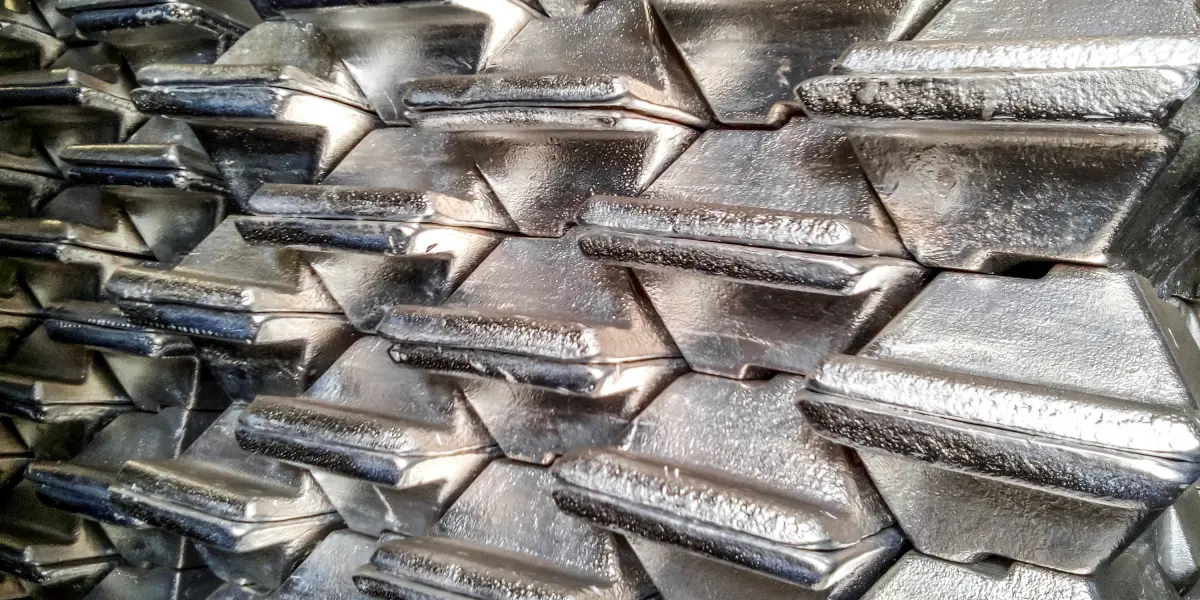
Basic Principles and Inherent Limitations of Spray Cooling
Causes of Uneven Cooling: Traditional spray cooling typically operates in a full-coverage or over-coverage mode. A significant difference exists in the heat transfer coefficients between the corners and the center of the ingot. This can easily lead to lateral temperature differences of up to several dozen degrees Celsius, triggering thermal stress cracks.
Reasons for Low Cooling Efficiency: A vapor film often forms on hot aluminum ingots when water is sprayed. Most designs target only the upper surface, resulting in insufficient cooling of the bottom.
Water resource and environmental issues: Open-spray systems cause high evaporation and water loss. The vapor mist can also harm the work environment.
Economic and Quality Drivers for Improving Cooling Efficiency
Cooling uniformity directly determines the grain size and degree of segregation in the ingot. Faster cooling rates within a controlled range can refine the grain structure and improve mechanical properties. Shortening the cooling time per ingot can, in theory, increase the production line’s cycle time. Therefore, optimizing cooling technology offers dual benefits: improved quality and increased production.
Making Spraying “Smarter”—Technologies for Refining Spraying Systems
Scientific Adjustment of Spraying Coverage Patterns
Research shows that switching from full spraying to partial spraying can greatly reduce side-to-side temperature differences. This happens in ingots.
Multi-Angle, Multi-Row Spraying Layout
Using dual-row or multi-row angled nozzles to spray the ingot surface from different directions. This effectively breaks up the vapor film and enhances heat transfer.
Rotary or Oscillating Spray Devices
By mechanically rotating or oscillating the nozzles, cooling water is evenly distributed across the surface of the ingot. This is particularly suitable for round or irregularly shaped ingots and can significantly improve cooling uniformity.
Automatic Liquid Replenishment and Recirculating Cooling Systems
Designing a makeup tank with a float valve or level sensor helps maintain the coolant level automatically. At the same time, adding a heat dissipation loop enables the recirculation of cooling water, thereby reducing water consumption.
Beyond Spray Cooling—Air Film, Electromagnetic, and Dual-Media Cooling Technologies
Air Film Soft-Contact Continuous Casting Technology—Insulation and Lubrication with “Air”
Principle: Compressed air is introduced between the inner wall of the mold and the molten metal to form a stable air film. The air film reduces the intensity of primary cooling while ensuring more uniform cooling and minimizing friction.
Effects: This technology significantly reduces the thickness of the subsurface reverse segregation layer in ingots. As a result, the process produces a fully equiaxed grain structure with a smooth surface and a dense interior. Furthermore, the lubrication provided by the gas film reduces drawing resistance, allowing for higher casting speeds.
Electromagnetic Stirring and Electromagnetic Casting Technology—Using “Fields” to Uniform Temperature and “Forces” to Refine Grains
Uniform Temperature Field: Electromagnetic forces drive forced convection in the molten metal. The temperature in the mold becomes more even. This helps fix uneven cooling between the upper and lower surfaces in horizontal continuous casting.
Grain Refinement: Electromagnetic stirring promotes the release of nucleation sites at the mold wall and liquid surface. The goal is to increase the effective nucleation density, thereby significantly refining the as-cast grain size.
Optimized Spray System Integration: Electromagnetic casting is often combined with an optimized spray system to further increase casting speed.
Improved Surface Quality: Electromagnetic forces reduce the contact pressure between the ingot and the mold walls. When combined with lubrication technology, this helps minimize surface scratches and cracks
Dual Cooling Medium Technology—Spray + Liquid Nitrogen, Achieving “Rapid Cooling”
Principle: Building on conventional spray water cooling, this method incorporates the heat absorption from the vaporization of liquid nitrogen. Liquid nitrogen flows through gas conduits to the ingot area. It helps cool the ingot using gas jet injection. An extremely low temperature significantly increases the cooling rate.
Applications: Best for special aluminum alloy grades that need very fast cooling rates. It also helps prevent coarse precipitation phases.
Dual Cooling Field Technology Combining Internal and External Cooling
In DC casting, in addition to external mold and water mist cooling. A cooling mandrel made of the same material is inserted along the central axis of the ingot. This enables internal conductive cooling, creating a synergistic effect between internal and external cooling to reduce central segregation and shrinkage cavities.
From “Open-Loop Spraying” to “Closed-Loop Intelligent Control”—Sensors and Automatic Regulation Technology
Infrared Temperature Measurement and Automatic Cooling Medium Switching
An infrared temperature sensor is installed at the end of the continuous casting line. It monitors the ingot temperature in real time. When the temperature drops below a set limit, the control system switches from spraying to airflow drying.
This prevents surface corrosion or cracking caused by overcooling. If the temperature is too high, the spray volume must be increased promptly. This adaptive control significantly improves cooling precision.
Computational Optimization Based on Heat Transfer Models
By establishing a numerical heat transfer model of the ingot solidification process, the optimal heat transfer coefficient is calculated for different process parameters. Based on this, the spray water flow rate, spray angle, and cooling medium combination are adjusted.
Semiconductor-Assisted Air Cooling
In certain small-scale or experimental production lines, semiconductor cooling plates are used to deeply cool compressed air. Blowing this cold air onto the surface of aluminum ingots serves as a supplementary or emergency cooling measure.
What Do These Innovative Technologies Offer? — Four Core Benefits
Increased Production Capacity
By improving cooling rates and uniformity. These technologies enable higher casting speeds, thereby increasing output per unit of time.
Quality Improvement
More uniform cooling reduces segregation, cracks, and shrinkage cavities. It results in a fine-grained microstructure, improving the product’s mechanical properties and machinability.
Energy Efficiency and Environmental Protection
Recirculating cooling and automatic water replenishment reduce water waste. Reduced steam emissions improve the working environment, and some technologies lower energy consumption caused by friction.
Cost Reduction
By reducing scrap rates and extending mold life, overall production costs are lowered.
Applicable Scenarios for Different Technologies
Existing Traditional Production Lines
Prioritize retrofitting with spray systems, as they require low investment and deliver quick results.
New or Upgraded Production Lines
Consider air-film soft-contact or electromagnetic-assisted technologies. Designing more efficient cooling solutions from the outset.
Special Alloys or High-End Products
Use dual-cooling or dual-cooling-field technologies. This helps achieve optimal cooling rates and microstructure control.
Feasible Approaches to Improving Aluminum Ingot Cooling Efficiency
Improving aluminum ingot cooling efficiency cannot be achieved through a single technology alone; rather, it is a systematic engineering endeavor. From improving the spray layout to using field-assisted methods like air films and electromagnetic stirring, every step matters.
Closed-loop control with smart sensors also has a strong scientific basis and practical benefits. For production lines of varying scales and requirements, as well as differing investment budgets. And quality objectives, a combination of different technical modules should be selected.
Recommended Steps:
Test the cooling uniformity and microstructural defects of existing production lines to identify bottlenecks.
Prioritize improvements to the spray system.
Evaluate whether electromagnetic agitation or gas film technology should be introduced.
Gradually deploy temperature monitoring and automatic switching controls to achieve intelligent operation.
Frequently Asked Questions About Aluminum Ingot Cooling Technology
Q: Does increasing the cooling rate necessarily improve aluminum ingot quality?
A: Increasing the cooling rate does not necessarily improve aluminum ingot quality. Excessively rapid cooling may increase internal stresses and the risk of cracking. The key is to match the cooling rate to the alloy type and ingot size, rather than blindly pursuing speed.
Q: Why does the air-film soft-contact technology improve segregation?
A: Because the air film reduces overcooling of the mold walls, resulting in a straighter solidification front. With a more uniform distribution of solutes, this effectively suppresses subcutaneous reverse segregation.
Q: Does electromagnetic stirring increase energy consumption?
A: Electromagnetic stirring does require additional electrical power, but the resulting improvements in quality and casting speed often offset the energy costs.